“When he saw the crowds, he had compassion for them, because they were harassed and helpless, like sheep without a shepherd.”
— Jesus · Matthew 9:36
HIGH · EVIDENCE GRADE
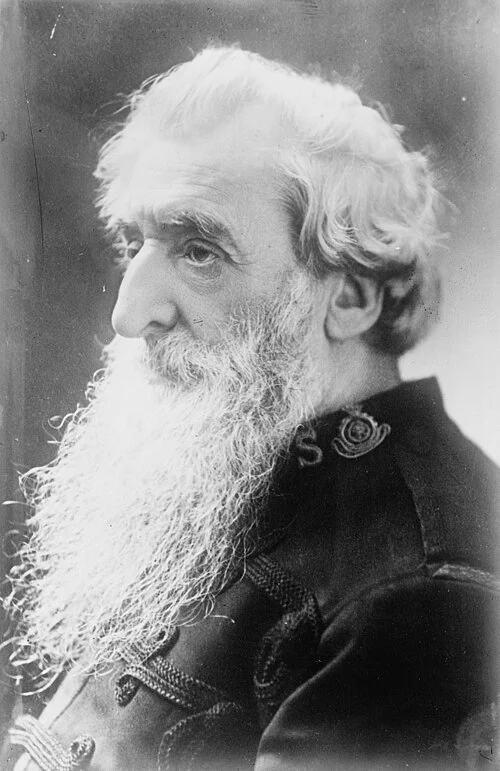
He preached to London's destitute when no church would have them, then built them an army — the Salvation Army, now at work in over 130 countries, on the founding program of soup, soap, salvation.
William Booth — general of the Salvation Army
Image credit & licence
Bain News Service, publisher · Public domain · This image is available from the United States Library of Congress's Prints and Photographs division under the digital ID ggbain.05091.This tag does not indicate the copyright status of the attached work. A normal copyright tag is still required. See Commons:Licensing.
The record, plainly: his methods were brawling and his theology rigid; the respectable churches of his day called the Army a scandal. The scandal fed the hungry.
EVIDENCE VS. COUNTERFACTUAL
This is an interpretive synthesis: the sources support elements of the story, but the overall causal weight remains open to historical debate. Grade note: the influence pathway is well documented; replacement remains a separate question
The causal chain — tap (i) for detail
01A Methodist evangelist in the East End (1865) Booth's evangelism developed among communities facing poverty and exclusion in London's East End. The setting made practical need difficult to separate from preaching and pastoral work. His initiative belonged to a wider religious and charitable landscape, while its particular methods aimed to reach people poorly served by established congregational routines.
02The Christian Mission becomes the Salvation Army (1878) The adoption of the Salvation Army name and military-style organization gave the movement recognizable roles, discipline and public identity. Those arrangements helped coordinate preaching, fundraising and service across different places. They were tools of a religious mission rather than evidence that everyone involved shared identical experiences or that organization alone guaranteed good practice.
03Soup, soap, salvation — aid without means-testing Food, shelter and other assistance made the movement's concern for everyday survival visible alongside its evangelism. The familiar slogan summarizes that combination but cannot establish the conditions attached to every service in every period. Practical assessment requires attention to who received help, what was offered and how dignity and freedom of belief were respected.
04A global movement in 130+ countries Expansion carried the movement's worship, organizational forms and social services into many national settings. Local workers and communities adapted its activity to different needs and legal environments. Its international reach demonstrates institutional durability, while changing country counts and uneven local experiences should be checked rather than used as a substitute for examining actual work.