
Without Jesus
Case WJ-V-01 · Branch 1 of 3
THE ATLAS›V · POLITICS›THE CIVIL RIGHTS MOVEMENT

The Civil Rights Movement

ENGLISH STANDARD VERSION (ESV)

“And he made from one man every nation of mankind to live on all the face of the earth, having determined allotted periods and the boundaries of their dwelling place,”

— Paul · Acts 17:26
HIGH · EVIDENCE GRADEFACTUAL RECORD

The American civil-rights movement was organized in churches and preached in a preacher's cadence.
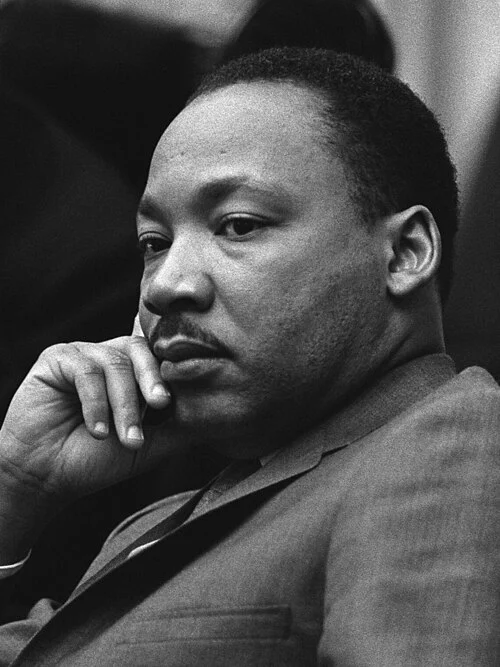
Martin Luther King Jr. — the preacher at the march
Image credit & licence

Yoichi Okamoto · Public domain · Lyndon Baines Johnson Library and Museum. Image Serial Number: A2133-10. http://photolab.lbjlib.utexas.edu/detail.asp?id=1083

Original image and licensing

The Montgomery bus boycott was planned in a church, funded by church collections, and led by a twenty-six-year-old pastor chosen because the ministers trusted him. The movement's mass meetings were worship services with an agenda; its discipline came from the pew; its oratory came from the pulpit. That is not a metaphor — the carpools and the budgets were church infrastructure.

Labor unions and secular radicals were there too, and the objection says so. But the meeting halls, the treasuries, and churches provided important infrastructure and leadership, though labour unions, secular organizations and other community networks also contributed.

EVIDENCE VS. COUNTERFACTUAL

This label distinguishes a factual historical record from the interpretation built around it. A well-documented event or influence pathway does not prove that no alternative history could produce a similar result. Grade note: the influence pathway is well documented; replacement remains a separate question

STRONGEST OBJECTION(S)

Labor unions and secular radicals were there too; but the meeting halls, the budgets and the leaders' formation were overwhelmingly ecclesial — that part is not seriously disputed.

The causal chain — tap (i) for detail
01Exodus and Gospel-equality language Exodus and Gospel language gave many civil-rights participants a vocabulary for confronting oppression and affirming equal worth. These texts were interpreted through Black communities’ experience, rather than simply repeated as abstract principles. Their use shows a religious contribution to the movement’s moral imagination, alongside legal, political and secular arguments.
02The Black church as institution and infrastructure Black congregations offered meeting places, leadership, collections and communication networks sustaining collective action. Those resources made the church a practical institution within the movement, not merely a source of inspiring words. Other organizations and community networks also mattered, so the infrastructure should be traced through particular campaigns and partnerships.
03King — a pastor — at the March on Washington (1963) King brought the formation and language of a preacher to a national political demonstration in 1963. Biblical imagery connected the demand for civil rights to a moral horizon his audience could recognize. The speech’s religious form does not make every participant Christian; it shows how a movement communicated through a preacher’s voice.
04Civil Rights Act 1964 · Voting Rights Act 1965 The Civil Rights Act of 1964 and Voting Rights Act of 1965 gave important federal legal expression to demands advanced through years of organizing. Religious leadership contributed alongside many other actors. The legislation was a major outcome, while discrimination and struggles over enforcement continued beyond the passage of the laws.
Encounter the Gospel invitation →