“He put another parable before them, saying, “The kingdom of heaven is like a grain of mustard seed that a man took and sowed in his field.”
— Jesus · Matthew 13:31
HIGH · EVIDENCE GRADE
The Edict of Milan (313): the empire's first sweeping guarantee of freedom of belief — that everyone might follow whatever religion he chose — followed by the Sunday rest law and the legalization of a church that outlived the empire.
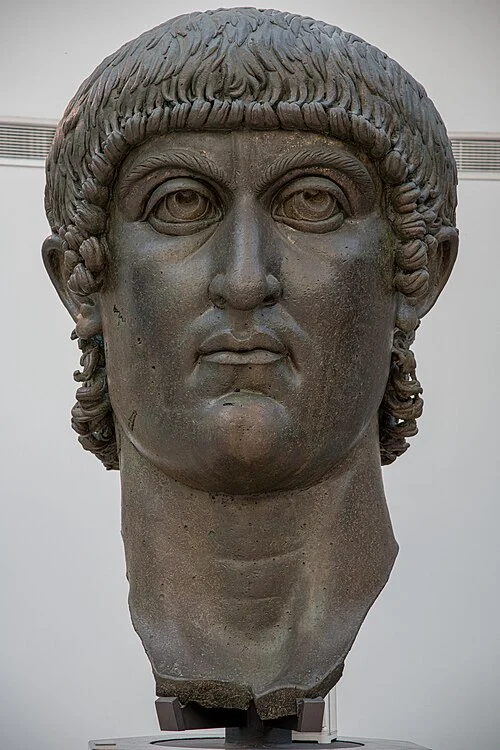
Constantine — colossal head of the first Christian emperor
The record, plainly: he executed his own wife and son, was baptized only on his deathbed, and used the church as an instrument of rule. The church he legalized was larger than his flaws — which, this ledger notes, is the recurring pattern.
EVIDENCE VS. COUNTERFACTUAL
This is an interpretive synthesis: the sources support elements of the story, but the overall causal weight remains open to historical debate. Grade note: the influence pathway is well documented; replacement remains a separate question
The causal chain — tap (i) for detail
01A vision and a conversion before the Milvian Bridge (312) Accounts of Constantine's experience before the battle connect military success with divine favour, but the surviving narratives differ and require comparison. His subsequent support for Christianity is clearer than every detail of the vision story. Distinguishing those levels of evidence prevents a powerful conversion narrative from carrying more historical certainty than its sources allow.
02The Edict of Milan with Licinius (313) The settlement associated with Milan in 313, involving Constantine and Licinius, helped secure toleration and restoration of Christian property. It belongs within an existing history of imperial persecution and earlier toleration measures. Its importance is substantial without describing it as the empire's first encounter with religious accommodation or as an unchanged modern right to freedom of belief.
03Sunday rest (321) Constantine's 321 Sunday measure restricted certain activities while allowing exceptions, including agricultural work. It provided a significant legal recognition of a weekly rhythm later closely associated with Christian societies. The details matter because the law was not a universal paid day off, nor a complete version of modern weekly-rest protections.
04The church builds — hospitals, basilicas, councils Imperial favour changed the church's access to resources, public space and political authority. Building projects and councils made that altered position visible, while also creating new dependencies and conflicts. The institutional expansion had long consequences, but later hospitals, schools and charitable organizations each require their own history rather than being credited directly to one emperor.