“Jesus Christ is the same yesterday and today and forever.”
— Hebrews · Hebrews 13:8
HIGH · EVIDENCE GRADEFACTUAL RECORD
The internationally dominant civil year-numbering convention ultimately derives from a Christian-era calculation, though adoption was gradual and other calendars remain in use.
The calendar the world standardized on
Image credit & licence
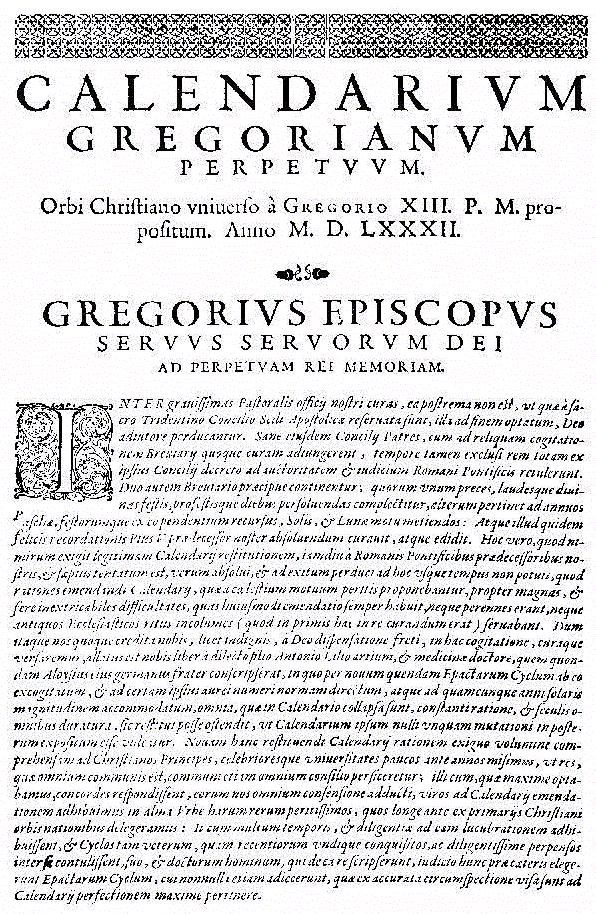
Gregory XIII · Public domain · http://www.henk-reints.nl/cal/gregcal.htm
The Gregorian civil calendar is widely used for international administration, business and technology, and CE/BCE keeps the same year numbering as AD/BC. This is a major Christian-era inheritance, but it is not the only calendar system in use and the international standard emerged through a long history of adoption.
EVIDENCE VS. COUNTERFACTUAL
This label distinguishes a factual historical record from the interpretation built around it. A well-documented event or influence pathway does not prove that no alternative history could produce a similar result. Grade note: the influence pathway is well documented; replacement remains a separate question
STRONGEST OBJECTION(S)
Numbering is arbitrary and ISO-8601 is bureaucratic, not theological — true, and irrelevant: the number everyone standardized on is still his.
The causal chain — tap (i) for detail
01Dionysius's Easter tables (525) Dionysius Exiguus used a Christian-era numbering scheme when preparing Easter tables in the sixth century. The immediate task was calculating a liturgical observance, not designing an international administrative system. A convention developed for that limited purpose supplied a number that later users could carry into broader chronological writing.
02Bede's popularization Bede's use of the era in historical writing helped make the convention useful beyond a table of feast dates. Readers could locate people and events within a shared sequence of years. Its wider adoption still required repeated choices by scribes, rulers and institutions; one influential historian did not instantly standardize every region's documents.
03The Gregorian standard goes global The Gregorian calendar spread through a long, uneven history of religious adoption, state decisions and international coordination. Its year numbering retained the Christian-era framework already in circulation. Civil use became much wider than church membership, while other calendars continued to organize worship, cultural life and some public dating practices.
04Your keyboard carries the epoch Many familiar digital dates use this inherited year numbering because software follows widely adopted civil conventions. A timestamp can therefore carry a distant connection with Christian chronology without expressing its user's faith. The connection applies to those calendar representations, not every way computers measure time or every calendar a person might select.PRESENT DAY