
Case WJ-P05 · Hall of fame
THE HALL OF FAME › GREGOR MENDEL
Gregor Mendel
1822–1884 · PRIMARY FIELD: SCIENCE & TECHNOLOGY
ENGLISH STANDARD VERSION (ESV)
“I planted, Apollos watered, but God gave the growth.”
— Paul · 1 Corinthians 3:6An Augustinian friar counting pea plants in a monastery garden founded genetics — and gave his findings to a scientific society he addressed as a cleric, without any sense of contradiction.
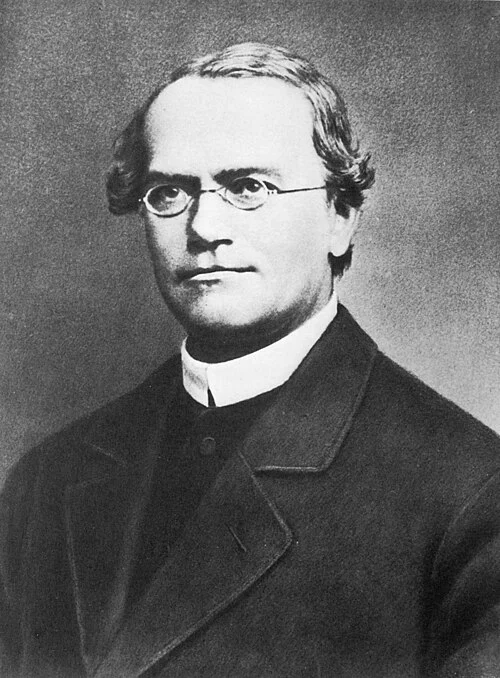
Gregor Mendel — the friar in the garden
Image credit & licence
Public domain · http://0.tqn.com/d/biology/1/0/l/e/3244238.jpg
Original image and licensingTHE RECORD, PLAINLY
The record, plainly: his order later feared his results would be misunderstood, and his work was ignored for thirty-five years — the church did not burn the paper, the century simply misplaced it.
EVIDENCE VS. COUNTERFACTUAL
This is an interpretive synthesis: the sources support elements of the story, but the overall causal weight remains open to historical debate. Grade note: the influence pathway is well documented; replacement remains a separate question
The causal chain — tap (i) for detail
01The garden at Brno (1856–63) Mendel's years in Brno placed his experimental work within the routines and resources of a religious house. The garden provided a practical space for sustained breeding experiments, while his education helped him formulate countable questions. This biographical setting explains where the work was possible without claiming that monastic life by itself generated the findings.
02The 1865 lectures: the laws of inheritance His presentations to the local scientific society described regularities found by tracking selected characteristics through successive generations. The central move was to make inheritance a problem of recorded crosses and numerical relationships. That public scientific setting matters: his results were offered for examination through evidence, rather than accepted because he was a friar.
03Rediscovered in 1900 — the foundation of genetics Wider recognition around 1900 changed the place of Mendel's earlier publication in scientific discussion. Researchers could interpret the old work in relation to questions then attracting new attention. His later reputation therefore depends on both the original experiments and a history of reception, rather than an immediate transition from one lecture to a fully established science.
Sources
See also
Field X — Science & Technology→