
Without Jesus
Case WJ-XI-08 · Branch 8 of 10
THE ATLAS›XI · BEYOND CHRISTIANITY›THE PHILIPPINES AND THE PACIFIC

The Philippines and the Pacific

ENGLISH STANDARD VERSION (ESV)

“He told them another parable. “The kingdom of heaven is like leaven that a woman took and hid in three measures of flour, till it was all leavened.””

— Jesus · Matthew 13:33
MED-HIGH · EVIDENCE GRADEINTERPRETIVE THESIS

Christianity reshaped religious and cultural life in the Philippines and parts of the Pacific, but through contested encounters rather than a uniform process.
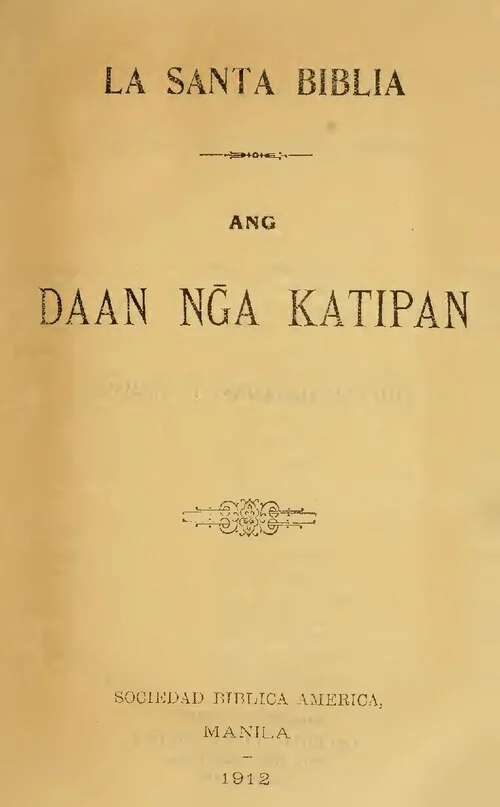
Christianity in the Philippines and its Pacific context
Image credit & licence

Sociedad Biblica America · Public domain · https://archive.org/details/HILOLD_DBS_HS

Original image and licensing

In the Philippines, Catholic Christianity became embedded in local calendars, devotions, artistic practices and public life under Spanish rule. Its history also involves the colonial state, social change, resistance, translation and local reinterpretation. Across the Pacific, Christianization took different forms under varied European and American colonial regimes and through later Indigenous and diaspora communities.

This is evidence of global influence, not evidence that local people were passive recipients. Christian traditions were changed by the societies that received them, and the histories of conversion and colonial power have to be read together.

EVIDENCE VS. COUNTERFACTUAL

This is an interpretive synthesis: the sources support elements of the story, but the overall causal weight remains open to historical debate. Grade note: a substantial pathway, with important contributing streams

STRONGEST OBJECTION(S)

Colonial structures were powerful and coercive in many settings; the scale, timing and forms of Christian influence varied widely across island societies and generations.

The causal chain — tap (i) for detail
01Spanish and later American colonial encounters The Philippines and Pacific islands encountered Christianity through different sequences of mission, trade and colonial power. These are related histories, not one identical experience. Colonial conditions affected how institutions operated and how communities responded, so the religious story must include both the message proclaimed and the power surrounding its transmission.
02Local communities translate, resist and adapt Christian practice Local Christians translated teaching, organized communities and shaped worship within their own languages and social worlds. They could accept, adapt or resist aspects of missionary practice. These choices are part of Christianity’s history, rather than deviations from an assumed original European form that alone counts as the movement’s real expression.
03Modern Christian identity and diaspora networks Migration and diaspora carry these Christian traditions into new settings while maintaining relationships with communities of origin. Faith can shape family, worship and mutual support across national borders. The resulting networks show continuing local agency and exchange, rather than a completed one-way transfer from the first missionary encounter.
Encounter the Gospel invitation →