ENGLISH STANDARD VERSION (ESV)“Jesus said, “For judgment I came into this world, that those who do not see may see, and those who see may become blind.””
— Jesus · John 9:39 The book was banned, the old man condemned to house arrest — theology's police arresting the motion of the earth.
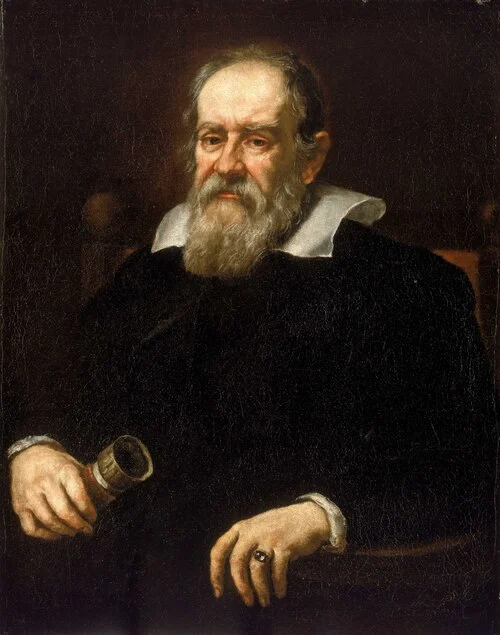
In 1633 the institutional church put a seventy-year-old scientist on trial for teaching that the earth moves, forced him to abjure on his knees, and confined him to his house for life. The affair is more complicated than the legend — Galileo had taunted his patron the Pope in print — and the church itself apologized in 1992, which is why this entry prints the apology, not the excuse.
It is also the exception this atlas's tenth field must carry honestly: the institutional channel did not merely fail to carry science, it sometimes dammed it. The channel claim stands; so does the dam.
EVIDENCE VS. COUNTERFACTUAL
This label distinguishes a factual historical record from the interpretation built around it. A well-documented event or influence pathway does not prove that no alternative history could produce a similar result. Grade note: the historical record and pathway are especially well established
CONTEXT
The context: Galileo taunted his patron the Pope in print, and the affair is more complicated than legend — but the Church itself apologized in 1992, and we print the apology, not the excuse.
01Dialogue Concerning the Two Chief World Systems (1632) Galileo's Dialogue presented competing cosmological systems through a literary conversation, bringing the question of Earth's motion to a broad readership. Its publication occurred within an existing dispute over permissible teaching and scriptural interpretation. Personal relationships and patronage shaped the conflict, but they do not remove the importance of the scientific and institutional issues at stake.
02Trial and abjuration (1633) The 1633 proceedings compelled Galileo to abjure the condemned position and subjected him to punishment by church authority. This was coercion over what could be publicly maintained about the natural world. Reading the trial as a specific event preserves its gravity without substituting a simple story that religion and science have always related in exactly this way.
03House arrest until death; the ban stood for two centuries House arrest constrained Galileo's remaining life, while restrictions on the work affected its public circulation. His continued scientific activity does not cancel those penalties. This stage concerns the institutional consequences of the judgment, which should be considered separately from the later success of heliocentric astronomy and the eventual removal of publication restrictions.
04John Paul II's commission concedes the error (1992) The later Vatican reconsideration acknowledged errors in the handling of the affair and failures to distinguish scientific inquiry from certain scriptural interpretations. That acknowledgment belongs in the record alongside the original judgment. It cannot undo the harm or be treated as a full explanation of it, but it documents an institution revisiting its own exercise of authority.PRESENT DAY