
Without Jesus
Case WJ-VII-01-02 · Concept
THE ATLAS›VII · ARTS & MUSIC›VISUAL ARTS›THE LAST SUPPER

The Last Supper

ENGLISH STANDARD VERSION (ESV)

“And he took bread, and when he had given thanks, he broke it and gave it to them, saying, “This is my body, which is given for you. Do this in remembrance of me.””

— Jesus · Luke 22:19
VERY HIGH · EVIDENCE GRADEFACTUAL RECORD

A refectory wall in Milan became the most reproduced dinner in the history of images.
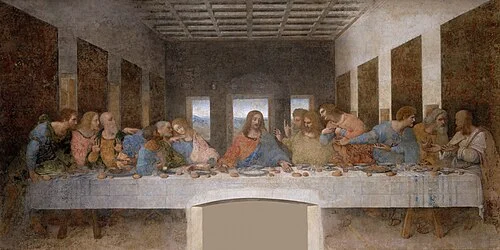
Leonardo's Last Supper, Milan
Image credit & licence

Leonardo da Vinci · Public domain · Online Taken on 23 July 2013

Original image and licensing

A Dominican friary's dining hall, a moment from a Passover evening, and a painter who experimented with the fresco until it began to flake within his own lifetime — none of it prevented the image from becoming the most reproduced dinner on earth, copied, parodied, and referenced in every medium invented since.

EVIDENCE VS. COUNTERFACTUAL

This label distinguishes a factual historical record from the interpretation built around it. A well-documented event or influence pathway does not prove that no alternative history could produce a similar result. Grade note: the historical record and pathway are especially well established

STRONGEST OBJECTION(S)

Reproduction is also a function of damage and fame; the image's cultural weight, not its aesthetic rank alone, is the claim.

The causal chain — tap (i) for detail
01A duke's commission (1495–98) Ludovico Sforza's patronage supported Leonardo's work in the refectory of Santa Maria delle Grazie in Milan. A painting of Christ eating with His disciples belonged meaningfully in a religious community's dining space. The commission joined a patron's ambitions, a friary's daily life and an artist's search for a compelling arrangement.
02One moment of a Gospel evening Leonardo concentrates on the disciples' reactions to Jesus' announcement of betrayal, making a Gospel narrative legible through gesture and grouping. Christ anchors the composition while movement spreads across the table. The scene's Christian identity supplies the dramatic event being represented; it is more than a religious title attached to an otherwise unrelated dinner.
03Endlessly copied, parodied, referenced Copies, prints, photographs and later adaptations made the arrangement recognizable far beyond its original wall. Parodies can work because audiences already know the central figure and the long table of disciples. That recognition is evidence of cultural reception, even when a particular reuse is commercial, critical or detached from Christian devotion.PRESENT DAY
Encounter the Gospel invitation →