
Without Jesus
Case WJ-VII-01 · Branch 1 of 5
THE ATLAS›VII · ARTS & MUSIC›VISUAL ARTS

Visual Arts

ENGLISH STANDARD VERSION (ESV)

“He is the image of the invisible God, the firstborn of all creation.”

— Paul · Colossians 1:15
VERY HIGH · EVIDENCE GRADEFACTUAL RECORD

For a millennium and a half, the dominant subject of Western art was the life of Christ.
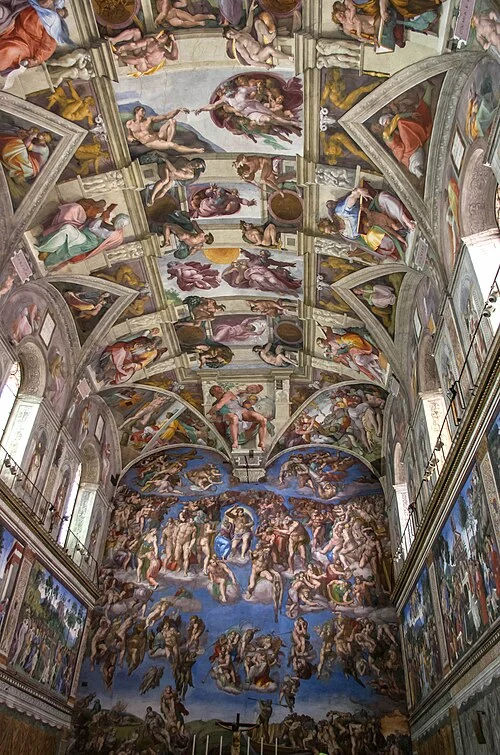
The Sistine ceiling — Genesis in fresco
Image credit & licence

Antoine Taveneaux · CC BY-SA 3.0 · File:Sistine_Chapel_ceiling_02.jpg

Original image and licensing

Other religions forbade the image; this one, because its God became visible, commissioned it. From the catacombs to Byzantine icons to the Sistine ceiling, the visual grammar of the West — how to show suffering, tenderness, glory, a face that matters — was developed almost entirely in the service of one subject.

The patronage objection is printed and answered honestly: yes, the Church was the biggest wallet in Europe, and yes, remove the theology and much art still gets made. But it gets made with different subjects, in different forms — and the volume that exists is the volume this claim rests on.

EVIDENCE VS. COUNTERFACTUAL

This label distinguishes a factual historical record from the interpretation built around it. A well-documented event or influence pathway does not prove that no alternative history could produce a similar result. Grade note: the historical record and pathway are especially well established

STRONGEST OBJECTION(S)

The Church was also simply the biggest patron with money; remove the theology and keep the patron, say the skeptics, and much art still gets made — with different subjects. The volume claim survives the objection; the counterfactual on quality does not, and we do not claim it.

The causal chain — tap (i) for detail
01The Incarnation — God made visible — licenses the image The Christian claim that the Word became flesh gave theologians and artists grounds for treating visible representation as a religious question. Christians disagreed sharply about images, so development was not automatic. This stage concerns how material art could communicate a faith centred on the Incarnation, including disputes over the limits of representation.
02Byzantine iconography Byzantine icon traditions developed recognizable portrayals of Christ, saints and biblical events within worship. Images carried conventions of gesture, inscription and composition rather than functioning only as decoration. Their role belongs within those devotional settings, including historical disputes over whether and how such images should be used.
03Renaissance patronage: Michelangelo's ceiling, Leonardo's Last Supper Churches and religious patrons commissioned major Renaissance works with biblical subjects and liturgical settings. Michelangelo’s ceiling and Leonardo’s Last Supper are concrete examples. Their religious purpose did not replace artistic invention; it supplied commissions, spaces and narratives through which artists developed distinct achievements.
04The canon of Western masterpieces Christian works became widely studied, reproduced and reinterpreted within Western art. Later viewers encountered them through museums, books and secular references as well as worship. The inheritance is therefore religious and cultural, while the wider world of visual art has many traditions beyond this particular lineage.
Modern concepts — what it becomes
The Sistine Ceiling→The Last Supper→
Encounter the Gospel invitation →