“For his invisible attributes, namely, his eternal power and divine nature, have been clearly perceived, ever since the creation of the world, in the things that have been made. So they are without excuse.”
— Paul · Romans 1:20
HIGH · EVIDENCE GRADE
The mind that gave the world the laws of motion and calculus wrote more words about Scripture than about physics — and described natural philosophy as reading the order God had written.
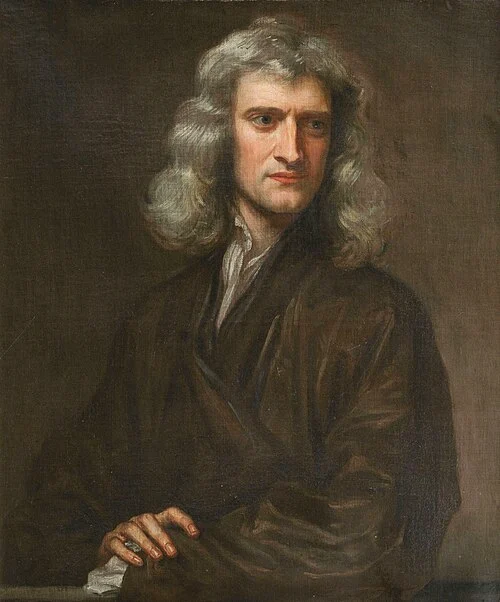
Isaac Newton — more words on Scripture than physics
Image credit & licence
Godfrey Kneller · Public domain · File:Portrait of Sir Isaac Newton, 1689.jpg from https://exhibitions.lib.cam.ac.uk/linesofthought/artifacts
The record, plainly: his private theology was unorthodox — he denied the Trinity, and kept it secret. The genius and the heresy lived in the same notebooks, and we print both.
EVIDENCE VS. COUNTERFACTUAL
This is an interpretive synthesis: the sources support elements of the story, but the overall causal weight remains open to historical debate. Grade note: the influence pathway is well documented; replacement remains a separate question
The causal chain — tap (i) for detail
01A lifetime of Bible study and prophecy calculation Newton devoted substantial attention to biblical interpretation, chronology and prophecy, much of it outside his public scientific publications. Those manuscripts reveal a religious intellectual life that accounts focused only on mathematics can miss. They also require care: his theological positions did not simply match the standard orthodoxy of every church that later celebrated him.
02Natural philosophy as the study of God's order Newton understood inquiry into nature within a world ordered by God, giving natural philosophy religious as well as intellectual significance. That outlook helped frame the enterprise for him. The mathematical claims themselves still depended on argument and observation, so his motivation should be distinguished from the evidence by which other investigators assessed his work.
03Principia Mathematica (1687) The Principia presented a mathematical treatment of motion and gravitation that connected terrestrial and celestial problems. Its importance rests on the scope and explanatory power of that analysis, not on the author's religious reputation. This stage identifies the scientific achievement through which a person with substantial theological commitments changed the study of nature.
04The foundation of modern physics Later physics built on, tested and revised Newton's framework, extending its reach while identifying limits. His work remains powerful in appropriate settings even after relativity and quantum theory changed fundamental accounts of nature. That reception demonstrates enduring scientific influence without turning Newton's theology into either a scientific result or a requirement for using his equations.