“in whom are hidden all the treasures of wisdom and knowledge.”
— Paul · Colossians 2:3
MED-HIGH · EVIDENCE GRADE
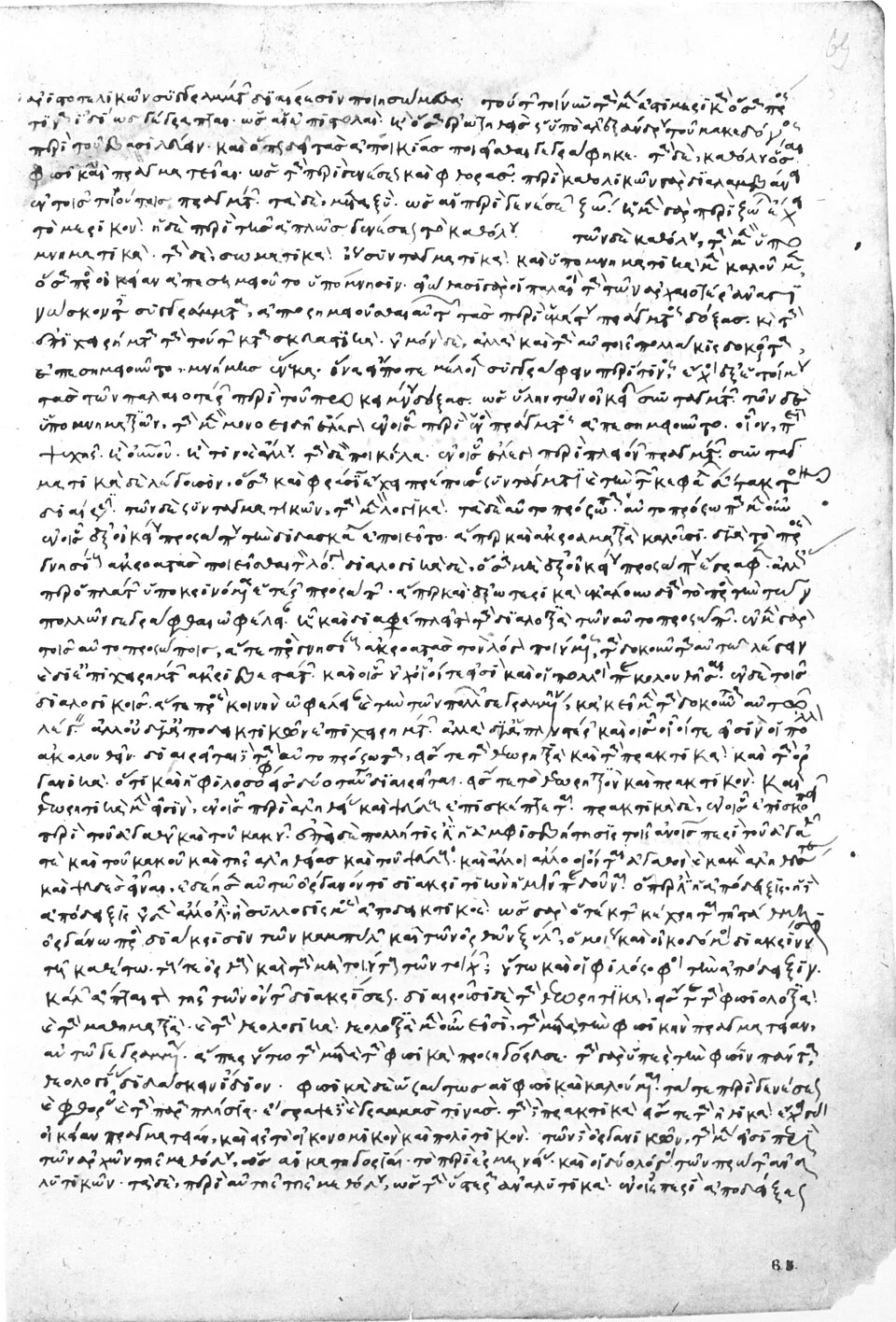
A Christian philosopher in Alexandria dismantled Aristotle's physics — arguing from a created cosmos that a thrown stone moves by an imparted force, not by the air pushing it — a thousand years before Galileo, who cited him by name.
John Philoponus — the Christian who dismantled Aristotle
The record, plainly: his line to modern science runs through Arabic intermediaries who often argued against him, and his theology (he was condemned later as a heretic) left him a man without a school. The idea outlived the exile.
EVIDENCE VS. COUNTERFACTUAL
This is an interpretive synthesis: the sources support elements of the story, but the overall causal weight remains open to historical debate. Grade note: a substantial pathway, with important contributing streams
The causal chain — tap (i) for detail
01Faith in a created, finite cosmos Philoponus challenged the Aristotelian account of an eternal cosmos from a Christian intellectual setting that affirmed creation. This disagreement opened questions about the authority of inherited philosophy. His contribution involved developing arguments, not simply replacing observation with a biblical citation, and its significance belongs within the debates of late antique scholarship.
02Systematic critique of Aristotle's physics His criticisms addressed the reasoning used to explain motion and the natural world, testing whether Aristotle's conclusions followed from experience and argument. That made disagreement intellectually productive rather than merely oppositional. The case illustrates a Christian thinker working critically within a philosophical tradition, while drawing on forms of reasoning shared beyond his religious community.
03The impetus concept — six centuries early Philoponus proposed that a projectile's continued movement should be explained by something imparted to it, rather than by surrounding air pushing it onward. This was an important alternative within the history of motion theories. It should not be equated with Newtonian inertia, which belongs to a much later mathematical framework with different definitions and explanatory aims.
04Transmission through Arabic and Parisian thinkers Later Arabic-language and Latin discussions preserved and contested arguments associated with Philoponus. Translation, quotation and criticism helped ideas survive beyond their original setting, sometimes in altered forms. Establishing a particular influence requires following those texts and readers; a similarity between two theories centuries apart does not alone prove a continuous line of transmission.
05Galileo praises him in print Galileo's references to John the Grammarian show that this earlier critic of Aristotle remained available in later debate. Such a named reference is stronger evidence of reception than a modern comparison based only on resemblance. It establishes awareness and selective engagement, rather than making Galileo's entire account of motion a simple continuation of Philoponus.